
Categories
Crisis communications

How to Turn Crisis Simulations into Corporate Citizenship Assets

Crisis simulations may be operational exercises at heart, but when they involve first responders, their visibility creates a unique opportunity for organizations to build trust with the communities around them.

Crisis simulations are often viewed as a purely internal necessity, an exercise to test procedures, escalation paths, and decision-making under pressure. Yet when simulations involve first responders, they inevitably extend beyond an organization’s walls and into the surrounding community. Fire trucks arrive on site. Ambulances move in and out. Sirens may sound. To anyone nearby, it can look very much like a real emergency unfolding in real time.

For some organizations, that visibility feels uncomfortable. There is a fear that neighbors may panic, rumors may spread, or local media may jump to conclusions. In practice, however, visibility itself is rarely the problem. What creates concern is uncertainty. When people do not know what is happening, they fill in the gaps themselves. When companies provide context, crisis simulations can shift from a perceived liability to a powerful demonstration of corporate citizenship.

What a Crisis Simulation Looks Like from the Outside

A full-scale crisis simulation is fundamentally different from a tabletop exercise. It is a live enactment of a crisis scenario involving both internal teams and external stakeholders.

Internally, crisis management and crisis communication teams test protocols, coordination, and messaging under realistic conditions. Externally, first responders such as fire departments, emergency medical services, and sometimes law enforcement actively participate. While the crisis communication effort remains invisible to the public, the first-responder component is anything but subtle.

Emergency vehicles may be seen entering factory grounds, personnel may move quickly across the site, and sirens may be used as part of the exercise. Neighbors will notice. The strategic question, therefore, is not whether people will see the simulation, but how the organization frames what they see.

Why Visibility Does Not Have to Create Fear

It is tempting to assume that emergency vehicles automatically alarm communities. In reality, neighbors are not unsettled by preparedness; they are unsettled by not knowing why it is happening.

When visible activity is unexplained, speculation fills the vacuum. When residents understand that an exercise is planned, controlled, and focused on safety, the same activity often reassures rather than alarms. Preparedness, when explained, signals responsibility.

This is where communication becomes decisive.

Tier 1: Risk Mitigation Through Proactive Community Communication

The first and non-negotiable benefit of communicating about a crisis simulation is risk mitigation.

Organizations should proactively inform the surrounding neighborhood ahead of time. Depending on context, this can be done through letters, flyers, emails, or even door-to-door outreach. These communications should clearly explain when the simulation will take place, how long it is expected to last, and which first responders will be involved.

Equally important is explaining why the exercise is being conducted. Neighbors should understand that the simulation exists to ensure that, in the highly unlikely event of a real crisis, everyone can be brought to safety swiftly and efficiently. Making it explicit that the odds of an actual incident are very slim helps anchor expectations and reduce unnecessary concern.

Handled properly, this communication does not draw attention to risk. It demonstrates diligence and accountability.

Tier 2: Turning Preparedness Into Corporate Citizenship

Beyond risk mitigation lies a second, optional but strategically powerful layer: brand building. Crisis simulations involving first responders create rare moments when preparedness becomes visible. Fire trucks and ambulances on site no longer signal danger. They signal coordination, responsibility, and collaboration.

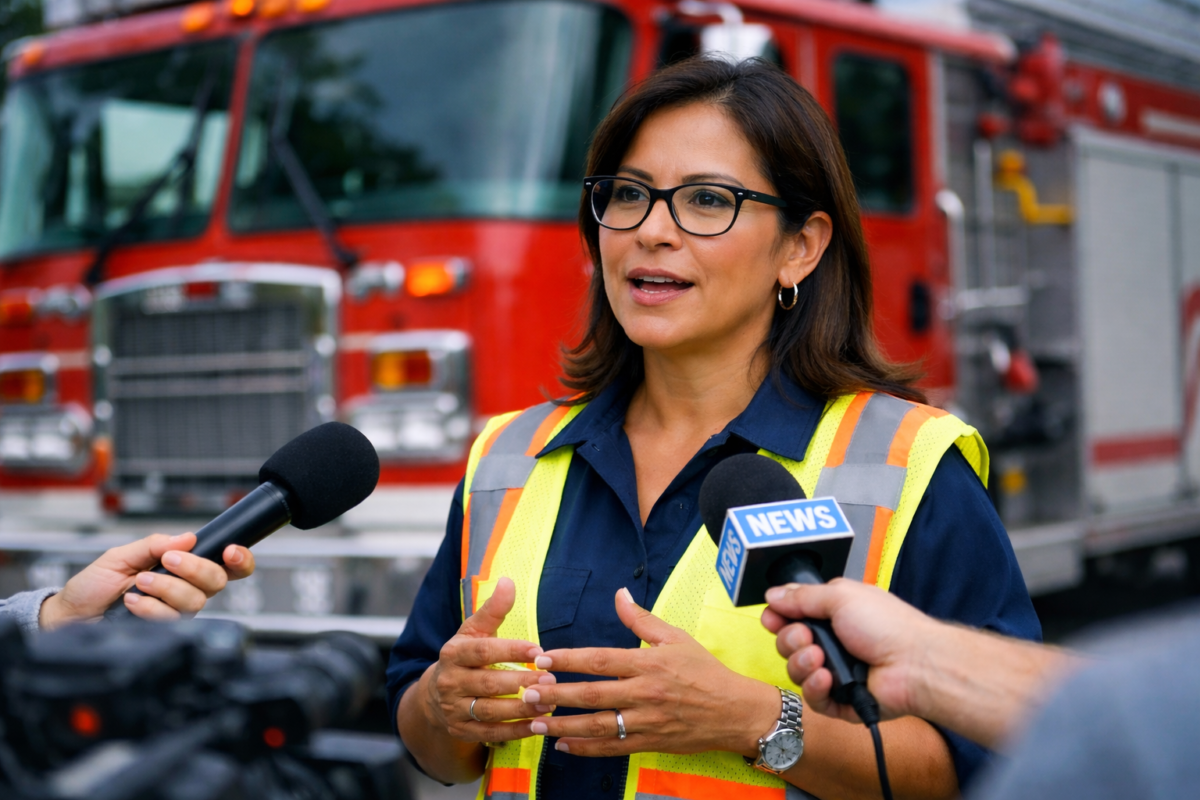
Proactive communication with local media reinforces this narrative. A simple briefing ensures journalists understand that an exercise is planned and controlled, preventing confusion if residents raise concerns. Organizations with sufficient capacity may invite reporters to observe the drill from a safe distance or speak with a company spokesperson afterward. Smaller teams can achieve a similar effect by sharing a concise post-event update with a quote and high-quality images. In all cases, operational facts should be paired with a clear message about safety, preparedness, and community responsibility, helping build reputational credit that matters if a real crisis ever occurs.

Owned media can extend this corporate citizenship story even further. A short blog post or social update explaining why the simulation took place, what was tested, and how first responders were involved allows the organization to frame the exercise in its own words and reach audiences far beyond the neighborhood. For example, Williams Companies published an engaging blog post on its own site titled “Practice means protection: Why we hold emergency drills with first responders,” which explains how drills improve preparedness, strengthen relationships with local emergency agencies, and reinforce safety culture across operations. This type of owned content communicates operational intent while reinforcing the idea that preparedness and community partnership are core organizational values.

When owned, earned, and local communications align, a single local simulation becomes a durable proof point of how the company shows up as a responsible corporate citizen.

Building Reputational Credit Before It Is needed

There is another strategic benefit that should not be underestimated. Media engagement around crisis simulations helps build reputational credit. Journalists who have seen an organization prepare responsibly are better equipped to contextualize information if a real crisis ever occurs. Trust built in calm circumstances often shapes coverage under pressure.

In that sense, crisis simulations are not just about readiness. They are about relationship-building.

Preparedness as a Visible Brand Asset

Crisis simulations will always be about safety first. But when first responders are involved, they are also moments when an organization’s values become visible to the outside world.

By communicating proactively with neighbors, briefing local media, and using owned channels to frame the narrative, companies can transform a moment of potential concern into a tangible brand asset. Preparedness, when explained, does not frighten communities. It reassures them and strengthens the organization’s standing in the places it calls home.


Categories
Crisis communications

How to Put Evidence-Based Crisis Communication into Practice

An overview of how communication professionals can apply insights from academic research to design, implement, and institutionalize evidence-based crisis communication in real-world organizational settings.

This article is a substantively shortened version of a chapter written by Jo Detavernier for the second edition of The Handbook of Crisis Communication (Coombs, W. Timothy & Holladay, Sherry J., eds.). The book can be ordered on Amazon through this link.

Both in-house crisis communication professionals and the consultants who advise them stand to benefit substantially from applying insights from academic research to crisis preparation and response. A commitment to evidence-based crisis communication strengthens not only the effectiveness of communication outcomes, but also the professional credibility of those responsible for shaping them.

Business communication as a management practice remains a relatively young discipline. As a result, much remains unknown about what makes communication, particularly crisis communication, consistently effective and efficient. Although notable efforts have been made to codify professional knowledge and develop a shared body of standards, the field still lacks the degree of theoretical consensus found in more mature professions.

A comparison with medicine helps clarify this point. When visiting different physicians for the flu, patients may receive slightly different recommendations, but there is universal agreement among accredited doctors about the biological mechanisms at work when a virus enters the body. In contrast, when organizations consult multiple communication professionals about a reputational issue, they may encounter disagreement not only about how to respond, but even about whether a reputational problem exists at all. Empirically validated approaches to crisis communication are rarely applied with the same degree of consistency.

Despite these limitations, the field of communication is far from devoid of reliable knowledge. A growing body of scientific research provides valuable guidance on how communication functions in high-stakes contexts. When professionals adopt an evidence-based approach, they are more likely to achieve their communication objectives, contribute meaningfully to organizational goals, and articulate defensible rationales for their decisions to internal stakeholders. Over time, this strengthens both their credibility and their influence within organizations.

Evidence-Based Management

Rob Briner defines evidence-based management as the conscientious, explicit, and judicious use of the best available evidence in decision-making (Briner, 2019). “Conscientious” implies a genuine effort to seek out evidence; “explicit” requires transparency about the evidence used; and “judicious” demands critical evaluation of evidence quality.

Briner further emphasizes that evidence-based practice draws on multiple sources of evidence. Specifically, he identifies four primary sources: scientific literature, organizational data, stakeholder concerns, and professional expertise. Individually, each source offers only a partial view; together, they enable a more complete understanding of what happened and why.

In addition to multiple evidence sources, evidence-based management follows a structured process consisting of six steps: asking answerable questions; acquiring evidence from the four sources; appraising the quality of that evidence; aggregating insights across sources; applying the findings to decision-making; and assessing the outcomes of those decisions.

When communication professionals incorporate academic research into their practice, they do so—implicitly or explicitly—as part of an evidence-based approach. While this article focuses primarily on scientific evidence, the remaining sources should not be treated as secondary. Research-informed strategies that ignore organizational history, stakeholder expectations, or practitioner experience are unlikely to succeed. Likewise, reliance on intuition alone has inherent limitations: professional experience lacks the large datasets, controlled conditions, and systematic feedback loops characteristic of scientific inquiry (Detavernier, 2020).

The Scientific Body of Knowledge in Crisis Communication

Among the most empirically grounded crisis communication theories are Situational Crisis Communication Theory (SCCT) and Stealing Thunder Theory.

Developed by Timothy W. Coombs, SCCT posits that effective crisis response depends on aligning the level of accommodative communication – ranging from denial to apology – with the degree of responsibility attributed to the organization (Coombs & Holladay, 2008). Perceived responsibility increases when crises result from human rather than technical error and when organizations have a history of similar incidents.

Importantly, SCCT strategies should be applied only after organizations have addressed stakeholders’ immediate needs for instructing and adjusting information (Sturges, 1994). Instructing information helps stakeholders protect themselves physically, while adjusting information supports emotional coping. Only once these needs are met should organizations turn to reputational positioning.

Stealing Thunder Theory, developed by Laura M. Arpan and Donnalyn Pompper, focuses on crisis timing rather than message content. The theory holds that reputational damage is reduced when organizations disclose crises themselves rather than allowing external parties to do so first. By “stealing the thunder,” organizations retain narrative control.

Research has shown this strategy to be so effective that it reduces the pressure to select the optimal response strategy in other respects (Coombs, 2017). Together, SCCT and Stealing Thunder Theory form foundational components of an evidence-based crisis communication framework.

Emerging Fields of Inquiry

Beyond established theories, crisis communication research continues to expand into new areas. De Waele, Claeys, and Cauberghe (2017) examined how vocal characteristics influence post-crisis reputation. Their findings indicate that, in preventable crises where organizations employ rebuild strategies, a low voice pitch combined with a slow speech rate yields more favorable outcomes. A high pitch may also be effective, but only when paired with a fast speech rate.

Social media crises represent another emerging domain. Coombs (2014) describes scenarios in which organizations face intense online criticism related to customer service failures or perceived irresponsibility. Research suggests that in cases of stakeholder venting, organizations should allow space for expression – even when commentary is highly negative – rather than attempting immediate suppression.

Adjacent Fields of Study

Crisis communicators can also benefit from insights drawn from adjacent disciplines. Risk communication is particularly relevant, with Vincent Covello’s Trust Determination Theory identifying empathy, competence, and honesty as key drivers of trust in high-risk contexts (Walaski, 2011).

Behavioral science further illuminates challenges that arise during crises. Coombs (2019) identifies information-processing issues such as message overload, acquisition biases, and group decision-making errors. Claeys and Coombs (2019) extend this work by suggesting that crisis response decisions are vulnerable to heuristic biases, including myopic loss aversion and hyperbolic discounting, especially under time pressure.

Putting Evidence Into Practice

Given the breadth of available research, how can practitioners translate evidence into practice? Several complementary pathways exist.

First, practitioners must educate themselves. Academic programs that integrate behavioral science provide a strong foundation, but learning also occurs through professional courses, seminars, and independent study. Organizations such as the Institute for Public Relations play an important curatorial role. Tools like the CEBMa Guideline for Critically Appraised Topics help non-academics assess research rigor (Barends et al., 2017).

Second, organizations should embed an evidence-based mindset into everyday practice. Knowledge that has been shown to work should be shared, documented, and institutionalized, most notably within crisis communication plans. Leadership plays a critical role in fostering a culture where decisions are expected to rest on evidence rather than assumption.

Third, evidence must be actively implemented. Crisis manuals and protocols can be designed to incorporate validated principles from SCCT, Stealing Thunder Theory, and behavioral science. Where decision-makers are prone to bias, interventions can target either individuals or their environments. Ensuring adequate rest and nutrition supports cognitive functioning, while environmental changes, such as structured checklists that prompt consideration of long-term consequences, can counteract short-term thinking.

More broadly, practitioners should inventory all actions required during a crisis and conduct a gap analysis between current practices and evidence-based recommendations. Crisis response involves both stakeholder engagement and the activation of internal processes and resources. Effectiveness depends on whether communication objectives for each stakeholder group are met as crises evolve.

Questions worth asking include whether senior communicators understand core crisis theories, whether spokespeople are trained in evidence-based verbal and non-verbal communication, and whether organizational conditions mitigate cognitive narrowing under pressure. Where gaps exist, organizations can develop roadmaps for improvement, invest in training, and build shared understanding of why new practices are warranted.

An organizational culture that values scientific insight and aligns practice with evidence is more likely to succeed in implementing evidence-based crisis communication – and to sustain those practices over time.

Bibliography

Barends, Eric, Rousseau Denise M., Briner, Rob B., CEBMa Guideline for Critically Appraised Topics in Management and Organizations. CEBMa, 2017.

Briner, Rob, The Basics of Evidence-Based Practice. SHRM Executive Network, 2019.

Claeys, An-Sofie and Coombs, Timothy W., “Organizational Crisis Communication: Suboptimal Crisis Response Selection Decisions and Behavioral Economics.” Communication Theory, 2019.

Coombs, Timothy W. and Holladay, Sherry, PR Strategy and Application: Managing Influence. Wiley-Blackwell, 2009.

Coombs, Timothy W., “State of Crisis Communication: Evidence and the Bleeding Edge.” Institute for Public Relations, 2014.

Coombs, Timothy W., “Stealing Thunder: A Valuable Research Line for Practitioners and Academics.” 2017.

Coombs, Timothy W., Ongoing Crisis Communication. Sage, 2019.

Detavernier, Jo, “Rob Briner Interview: Management Consultants Do Not Know How to Read the Scientific Literature.” 2020.

De Waele, Aurélie, Claeys, An-Sofie and Cauberghe, Verolien, “The Organizational Voice.” Communication Research, 2017.

Sturges, David, “Communicating Through Crisis.” Management Communication Quarterly, 1994.

Walaski, Pamela, Risk and Crisis Communications. Wiley, 2011.

Categories
Crisis communications

Jo Detavernier shares “three things” on the Centre for Crisis and Risk Communications vlog

Jo Detavernier shared three important insights on evidence-based crisis communications on the vlog.

The Centre for Crisis and Risk Communications is a Canadian crisis management training center that works closely with Vincent Covello. The centre offers real-time crisis communication assistance, tools, training, and workshops.

The centre’s managing director and principal is Benjamin Morgan, a seasoned crisis communications specialist who has helped Canadian authorities manage the 2013 Calgary floods and the 2016 Fort McMurray wildfire, among other events.

Mr. Morgan also hosts the Centre’s vlog, where guests share three important insights on a crucial crisis communications topic. When Jo Detavernier was a guest on the vlog, he provided three insights on evidence-based crisis communications.

A deeper elaboration on the insights he shared can be found in the second edition of the Handbook on Crisis Communications (W. Timothy Coombs and Sherry J. Holladay, eds.).

A deeper elaboration on the insights he shared can be found in the second edition of the Handbook on Crisis Communications (W. Timothy Coombs and Sherry J. Holladay, eds.).

Categories
Crisis communications

Jo Detavernier to conduct a PRSA webinar on evidence-based crisis communication

On May 15, 2024, Jo Detavernier will conduct a PRSA Learning Webinar on evidence-based crisis communication.

In the webinar, Jo will provide an introduction to established and emerging crisis communication research. Among the established theories he will discuss the Situational Crisis Communication Theory, as well as the Stealing Thunder Theory. The former is instructive about how organizations should communicate critical news while the latter elaborates on when they should communicate it.

His venture into research from emerging and adjacent fields of academic inquiry will also cover recent findings on the impact of vocal cues on crisis communication efficiency, along with insights into how crisis-biased heuristics can lead communicators astray (and what communicators can do to prevent this from happening).

Finally, Jo will also discuss how practitioners can incorporate an evidence-based approach to crisis communications in their crisis communication plans and training programs.

The webinar’s content expands on the contribution Jo wrote in the second edition of the Handbook of Crisis Communications that was published by John Wiley & Sons in 2023.

More information on the webinar can be found on the registration page. The webinar is available to both members and non-members.

Categories
Crisis communications

Jo Detavernier speaks at PRSA Houston PR Day

Jo Detavernier will speak about evidence-based crisis communication at PRSA Houston’s PR Day.

The annual edition of PRSA Houston’s PR Day will take place on 22 November this year. At this event, public relations and communications professionals of all levels and from all industries gather together during one day to learn from one another.

PR Day 2023 will be held at Hotel Zaza in Houston’s Museum district. Anyone who is interested in attending (PRSA membership is not required) can register on this page.

Focus areas of the 2023 PR day include communications strategies and tactics, digital content trends and best practices, reputation management, and crisis communication. Jo Detavernier will talk about the latter topic – in his lecture he will elaborate on what evidence-based crisis communication looks like and how practitioners can apply an evidence-based approach in all of the work they do helping organizations prepare for and communicate in crises.

Anyone who is interested in evidence-based crisis communication will find more information on the topic in Jo Detavernier’s contribution to the recently published second edition of the Handbook on Crisis Communication.

Categories
Crisis communications

Evidence-Based Crisis Communication in a New Handbook

Jo Detavernier contributed a chapter on evidence-based crisis communication to a new handbook edited by Timothy W. Coombs and Sherry J. Holladay.

The Handbook of Crisis Communication offers students, researchers, and practitioners a timely and comprehensive overview of the crisis communication field. Contributions from more than 50 scholars and practitioners reflect a wide range of methodological approaches, examine how crisis communication is applied across diverse contexts, explore the role of culture and technology, and present original research relevant to the development and evaluation of crisis communication theory.

The second edition of the Handbook comprises 38 chapters and delivers fresh insight into established areas of crisis communication while also addressing new and emerging lines of research. It integrates a broad range of new case studies, practical scenarios, and in-depth analyses of recent crises, making the volume particularly valuable for both academic study and professional practice.

Jo Detavernier contributed a chapter on how crisis communication can be developed as an evidence-based practice. In his chapter, he outlines scientifically validated insights drawn from crisis and risk communication research and shows how practitioners can integrate an evidence-based approach into their everyday crisis communication work.

The Handbook of Crisis Communication is published by John Wiley & Sons. More information about the book, including the table of contents, is available on the the publisher’s website. A shortened version of Jo Detavernier’s chapter is presented in this blog post.