
South by Southwest (SXSW) is often described as a launchpad for new technology. For B2B tech companies, that framing is misleading.
SXSW concentrates a large amount of media attention, but it also creates one of the most crowded and attention-saturated environments tech journalists encounter all year (around 2,800 journalists in 2024). Panels, briefings, off-site conversations, product showcases, and competing trend narratives unfold simultaneously.
This environment regularly produces visibility for consumer technology, while many B2B tech launches struggle to gain traction. The difference is not quality or ambition, but how attention is distributed at SXSW.
For B2B tech companies, SXSW is rarely an optimal moment for first-time launches. It functions more effectively as a sensemaking moment.
Sensemaking refers to helping journalists and the market interpret what a technology reveals about changing conditions, rather than introducing the technology itself.
Why SXSW Is a Difficult Launch Environment for B2B Tech
By the time SXSW begins, most tech editors already operate with full schedules and provisional story frames. Their role during the event centers on synthesis rather than discovery.
At SXSW, journalists focus on identifying patterns across enterprise software, AI, data infrastructure, security, regulation, and organizational change. Individual launches tend to attract attention only when they help explain one of those shifts.
This differs from traditional technology trade shows such as CES or Mobile World Congress. At those events, launches are expected and structurally visible. Editors attend in evaluation mode, and coverage logic favors comparison and inspection.
SXSW does not privilege that mode of coverage. Product announcements compete with macro narratives and are often absorbed into broader trend reporting. Even well-executed B2B launches can struggle to register in an environment optimized for interpretation rather than inspection.
Why Consumer Launches Often Succeed Where B2B Launches Struggle
SXSW is built around quick attention and buzz, which plays to the strengths of consumer technology. Consumer products are immediately legible. Journalists can understand them quickly, often without explanation or context. They are easy to demonstrate, easy to describe, and easy to share. Brief exposure can still translate into visibility.
B2B technology rarely has those characteristics. Enterprise products typically require explanation of workflows, roles, constraints, and trade-offs. Their relevance depends on buyer context. Shallow exposure is more likely to obscure value than to clarify it. This asymmetry explains why SXSW can appear launch-friendly while remaining inhospitable to many B2B product debuts.
A Clear Example: IBM and Sensemaking at SXSW
A clear illustration of this dynamic can be found in how IBM used SXSW in relation to Watson and, later, watsonx.
IBM launched its modern enterprise AI platform, watsonx, in May 2023 at its own Think conference. Positioning, enterprise framing, and market introduction occurred outside the SXSW cycle.
By the time IBM appeared prominently at SXSW 2025 (March 7–15), the technology was already in market. SXSW was not used to introduce watsonx. It was used to situate enterprise AI within broader discussions about operational limits, governance challenges, and the gap between hype and implementation.
Coverage emerging from SXSW reflected those themes. Watson and watsonx appeared as reference points in stories examining where enterprise AI was delivering value and where it was encountering friction.
The Two-Tier Campaign That Enables Sensemaking
Treating SXSW as a sensemaking moment can be operationalized through a deliberate two-tier media approach.
Six to eight weeks before SXSW, companies issue a signaling announcement. This is typically a press release or update establishing presence and outlining what will be discussed or demonstrated at the event. This communication should be framed around the problem space rather than the product itself.
The primary objective at this stage is awareness rather than immediate, in-depth coverage. That said, this type of announcement will often generate some coverage in its own right – typically brief items in trade media, inclusions in “what to watch at SXSW” roundups, or mentions in newsletters. This early visibility establishes familiarity and relevance under calmer conditions and supports more substantive sensemaking conversations during the event.
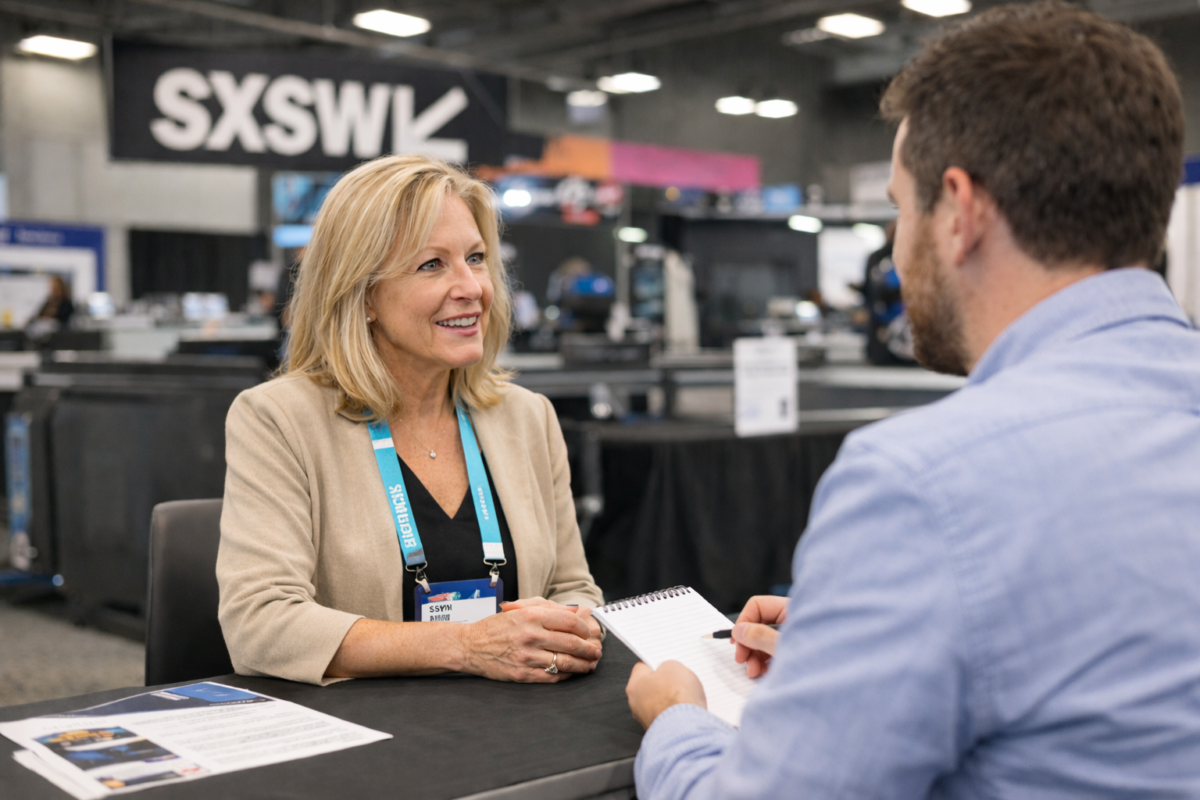
One to two weeks before SXSW, journalists are re-engaged. This second outreach functions as a reminder rather than a new pitch. It reconnects the earlier narrative to the upcoming event and offers access to leadership for focused one-on-one conversations.
This sequencing aligns with how tech editors plan coverage around SXSW.
Leadership Access, Narrative Coherence, and Editorial Depth
Leadership access alone is insufficient. To support sensemaking, leadership must be prepared with a coherent story that holds across interviews, panels, and informal conversations. This requires thematic message maps that clearly articulate the central narrative, supporting key messages, and concrete proof points.
At SXSW, journalists often speak with multiple executives across different companies in rapid succession. Inconsistent framing or loosely connected talking points dilute credibility. Coherent message architecture ensures that individual conversations reinforce one another and ladder up to a consistent interpretation of the market.
Effective leadership engagement at SXSW therefore combines availability with discipline: a shared narrative spine, clearly defined themes, and evidence that demonstrates how those themes play out in practice.
IBM’s SXSW engagement reflected this approach. Leadership discussions consistently returned to the same underlying questions about enterprise AI readiness, governance, and operational reality, supported by concrete examples rather than abstract claims.
SXSW as a Sensemaking Environment
SXSW operates as a sensemaking environment rather than a launch environment for B2B technology.
Launching ahead of SXSW establishes awareness when attention is less fragmented. SXSW provides an opportunity to interpret what that launch reveals about market conditions. Follow-up after the event allows companies to return to specifics once understanding has developed.
This framework reflects how attention and editorial judgment function at SXSW, rather than how companies might wish them to function.