
B2B companies can amplify media coverage by systematically extending earned visibility across websites, social media, newsletters, sales conversations, and branded search moments.
For B2B companies, earned media coverage remains one of the most credible ways to build visibility, trust, and brand authority with external audiences such as buyers, prospects, partners, investors, and other stakeholders who shape commercial outcomes. A well-placed article or interview in a respected trade or business outlet signals relevance and legitimacy in a way few owned or paid channels can replicate.
Yet too many organizations treat media coverage as a one-off event. The article is published, the interview airs, a link is shared once on social media, and attention quickly shifts to the next pitch. In doing so, companies leave meaningful value on the table.
In reality, earned media should be viewed as a durable asset rather than a fleeting moment. With a thoughtful amplification strategy aimed at external audiences, a single piece of coverage can support brand building, demand generation, sales conversations, and commercial validation for months or even years after publication.
Turn media coverage into owned content without copying it
One of the most straightforward and underused amplification tactics is to reference media coverage on your own website. This can take the form of a short blog post or a newsroom item that highlights the article and links to the original publication.
The emphasis should be on context rather than reproduction. Companies should avoid copying the article or lifting extended excerpts. Instead, they can briefly describe what the piece covered, why the topic matters to the market, and what readers can expect if they click through. This allows organizations to frame the coverage for their audience while respecting the publisher’s work.
As a professional courtesy and to manage expectations, companies should also clearly indicate when the article they are linking to is gated or behind a paywall. Transparency reflects well on the brand and avoids frustrating readers.
Share the coverage on social media strategically and repeatedly
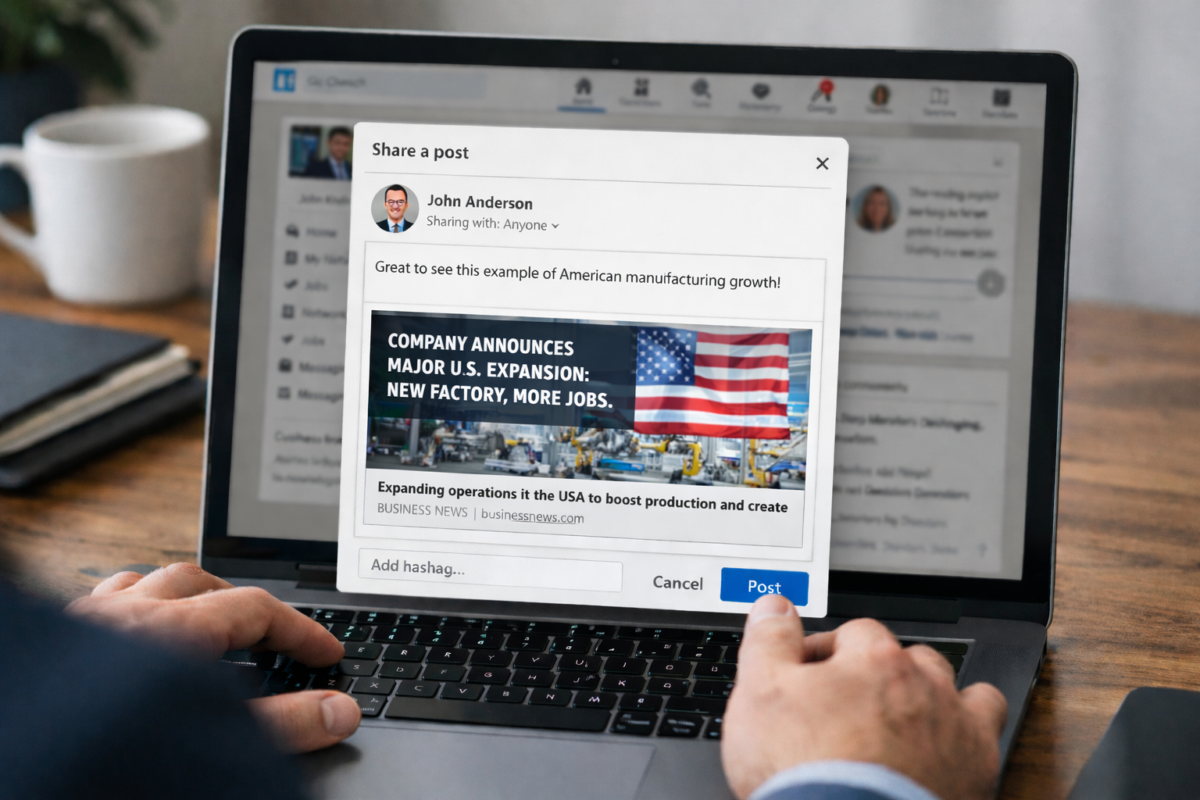
Social media amplification should extend well beyond a single post on the day an article appears. For B2B organizations, LinkedIn is by far the most important platform given its concentration of decision-makers and industry professionals.
The spokesperson who gave the interview should share the coverage and ideally add context on why the topic matters or what prompted the discussion. Amplification should not stop there. Employees, particularly those in leadership, sales, and subject-matter roles, can be encouraged to share the article with their own networks to extend reach organically.
In parallel, the company’s LinkedIn page should publish its own post written in a more institutional voice. That post can be reshared over time as the topic remains relevant or resurfaces in industry conversations. For especially strong or strategic coverage, selective paid promotion can further extend reach by placing credible third-party validation in front of clearly defined target audiences.
Extend the impact through newsletters
Email newsletters remain a powerful owned channel in B2B, particularly when audiences have opted in for insight rather than promotion. Earned media fits naturally into this environment.
Companies can include a short description of the article in their newsletter, either as native editorial content or as a link to the blog or newsroom post that references the coverage. Over time, consistently featuring earned media reinforces the perception that the organization’s perspectives are sought out by respected third parties.
Use earned media to support sales conversations
Beyond marketing channels, earned media can play a meaningful role in sales enablement. Links to relevant articles can be shared in one-to-one prospect emails, referenced in sales decks, or cited in RFP responses and procurement documentation.
In long B2B buying cycles, buyers often seek reassurance that a company is credible, established, and recognized beyond its own messaging. Earned media provides that validation at precisely the stage where trust and risk reduction matter most.
Use email signatures as quiet amplifiers
A subtle but effective tactic is to reference media coverage in email signatures. A single line such as “As featured in” followed by the publication name and a link to the article reinforces credibility in every external interaction.
Because email signatures appear in personal correspondence, this form of amplification feels understated rather than promotional. It works particularly well in sales, business development, and partnership contexts. Accuracy is essential. Companies should always link to the actual article and avoid language that could imply endorsement.
Reinforce credibility in branded search moments
Earned media also plays an important role when external audiences actively research a company. Prospective buyers rarely rely on a single source. Instead, they look for consistency between what a company says about itself and what independent third parties say about it.
By referencing media coverage on their own site and linking to original articles, companies strengthen branded search results without ceding narrative control. The goal is not for third-party articles to outrank owned pages, but for earned media to appear alongside them as independent validation when buyers are assessing credibility and reducing perceived risk.
Showcase media logos carefully and correctly
Many B2B websites include logos of media outlets in which the company has appeared. When done correctly, this can be a powerful trust signal. Tier-one and respected trade publications carry real brand equity, and prospective buyers notice.
Precision matters. Using phrasing such as “As featured in” is widely accepted and legally safe in the United States provided coverage is accurately represented and not overstated. Companies should avoid implying endorsement or partnership where none exists and remain selective in which logos they display.
Leverage print and broadcast within licensing rules
For organizations that rely heavily on in-person sales, conferences, or investor meetings, sharing media coverage in physical or audiovisual form can still be effective. A printed article or referenced broadcast segment can lend weight to conversations.
Legal considerations are critical. Reproducing print articles typically requires a license from the publisher. Without permission, companies are not allowed to copy or distribute articles, even if the coverage is about them.
The same principle applies to broadcast media. While it is acceptable to link to a television or radio segment on the outlet’s own platform, downloading an episode and hosting it on company-owned channels without permission is generally not allowed. Linking rather than hosting is the safest and most professional approach.
From moment to asset
When treated strategically, media coverage is not an endpoint but a starting point. Thoughtful amplification aimed at external audiences transforms earned media into a compounding asset that reinforces credibility across marketing, sales, and brand touchpoints long after the initial publication or airing.
For B2B companies operating in trust-driven, high-consideration markets, this shift in mindset can make the difference between fleeting attention and durable brand equity.